
Update: Kevin Trethewey has extended this conversation on his blog.
I commented on a photograph that Kevin Trethewey shared of the code retreat that was hosted in Johannesburg, South Africa recently. His response was very defensive and it clearly showed that he was taking my observation personally. That was something that I didn’t anticipate, as I have not seen Kevin carry prejudices of other race groups.
What followed was quite an interesting conversation on the disproportionate representation of non-whites in the South African software community. I’m going to comment on parts of this conversation. For the full conversation, go here.
A point to note here is how quickly people focused on racial composition as opposed to gender composition of the group. That is a problem in itself, even for the most gender-aware man in a software community.
This is a long, long, long post, mostly because it is a brain dump of the themes that were flowing in this conversation.

There is adequate opportunity and access for everyone
Kevin believes that there is fair access and opportunity for all of us to attend an event such as the code retreat. I disagree. For example, I know a few black software developers that don’t live in a conveniently accessible middle class suburb. For them, getting to work is a challenge. To get to a community event outside of the peak public transport service hours is a huge issue. The same applies to people attending university. A black kid living in a township with minimal to zero essential services loses at least 3 hours of study time a day when compared to her more privileged peers. Accumulate that over a month and we find that she loses about 6 days of work a month. Our lives are not equal in far more fundamental ways than we wish to acknowledge.
It is also a matter of survival, and not that people lack ambition to be better developers. When we have less than enough of everything that is essential for living, then a meagre salary is a big deal. Many black developers I know are supporting their entire family, if not an extended family. When we’re in survival mode, ambition is lower priority.
I would love to see events hosted closer to the people that have greater logistical challenges. That’s why Braamfontein was a good venue for Agile Africa. Maybe in 2014, we will have a software conference in Soweto for the first time. When I want to help someone out of a dark place, I prefer to go into the dark and walk out with them, taking the bumps together, than to just stand outside and shine a light in the distance to where they should go.

People are apathetic
Simon Stewart was of the opinion that it is a lack of caring – an apathy. I don’t know which group of people Simon refers to here so I will steer clear of making assumptions. What I have noticed is that the majority of software developers don’t care much for self-learning. The code retreat that sparked this discussion is a case in point. Twenty seven developers pitch up to practice their TDD skills. I don’t know how many developers there are in Johannesburg, but I guess that this is less than 1% of the total. Regardless, I don’t have a problem with this apathy. Some people “give a shit” about different things, like earning a salary first. Because they care less for self-learning, does not mean they don’t care at all. It just means that their value system is stacked differently from others.
I don’t believe it is about software craftsmanship either. I think software craftsmanship as a community appeals to people that share that value system and the way that community engages with others. I’m not one for the craftsmanship movement for reasons that are irrelevant here. However, I do respect that this community has a right to exist alongside all the others. Not caring about software craftsmanship does not mean that a developer does not care about growing. Some of the most accomplished, self-taught developers I know care far less for craftsmanship than I do. We need to help people understand their potential, and provide diverse ways in which they can fulfil their potential. Sometimes people will break through that ceiling, setting up a new potential to fulfil.

Lack of diversity is commonplace
Simon rightfully points out that the lack of diversity is common. I concur. I’ve spoken at a few conferences outside our continent and it is the same in most places, as much as it is within ours. Again, that it is so does not mean that we should accept this. Make up your own mind, but I cannot accept that. I’ve been talking about diversity publicly for several years now. I’ve been on projects where the direct result of us not working with our diversity resulted in a tragic cost of the human spirit. I cannot accept that we are prepared to allow that to happen again and again and again.
I try to be a lot more aware, a lot more empathetic. I’ve been fighting my own unsettling biases to appreciate our diversity, to celebrate our differences and embrace our uniqueness. The scary part is this very process of appreciation demands that we drop all our prejudices. To do that requires self-reflection and clarity to face the truths of our deeply internalised, and camouflaged stereotypes. Be prepared to cry for ourselves. Be prepared to feel lighter on the other side of that.

Quotas and Meritocracy
Steven asked what he thought was a silly question. But it is not silly at all – “How should a code retreat represent the demographics of the country?” For me it comes down to us building a significant software development sector in South Africa. The white minority cannot satisfy that agenda alone because there aren’t enough of them. We need black software developers too. Parallel to this, we need fair and equal gender representation too. South Africa has one of the most humane constitutions in the world. Yet, I see many software developers adopt the non-inclusive behaviour of frat boys, country clubs and colonial style thinking of the west and north. That is a learned behaviour that I refuse subscribe to. Given our history of the inhumanity of apartheid, I find this behaviour equally abhorrent. Incidentally, I was part of a very diverse group of developers that were reflecting on what we don’t like of the software development community, locally and globally. What emerged were distinct pointers to this imported, inhumane subculture: elitism, arrogance, fear, bullying, sexism, racism, monopolies, nepotism and a lot more.
Steven also dangled the option of quotas. South Africans are masters of quotas. We’ve tried that in almost everything from sports to business. It turns out that Steven is not offering quotas as an option. What is relevant for me is the other side of the quota argument – inclusion by merit. Meritocracy is a subtle form of exclusion. In Africa, where we have significant disparity on multiple levels. Meritocracy just widens the gap between those that have excelled and those that may excel but don’t have opportunity to do so.
I’ve been guilty of exercising meritocracy to the extent of building a company based on inclusion by merit. Being elitist is one of the easiest ways of being exclusive, and oh so easy to cover up whilst staring in the face of everyone. What changed for me was a change in my attitude. I now carry an attitude where I respect the potential of each individual. I realised that we need people to contribute in their own little way, acknowledge that contribution and then help that person raise their own ceiling.

We must challenge the bias of minorities
Here is Steven’s alternative to quotas. I ask that we not flame him or attack his position. This is his position and I want us to respect that. If I want to change Steven’s mind, then I need to offer him alternatives, not antagonise him.
I agree that tech events are open to everyone. I don’t accept that non-whites and women – the “minorities” – don’t attend because they hold prejudices against the pale males. I think the problem is to do with accessibility, opportunity and a necessity for survival prioritised higher than self-learning, as discussed above. By the way, Steven, as a white male, you are the minority.
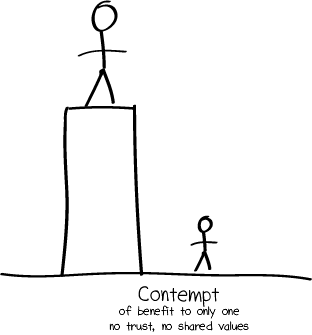
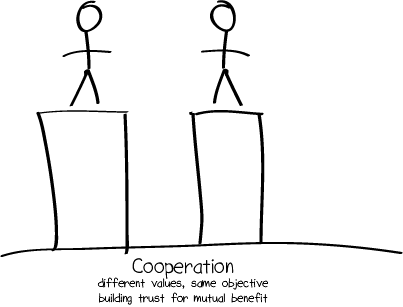
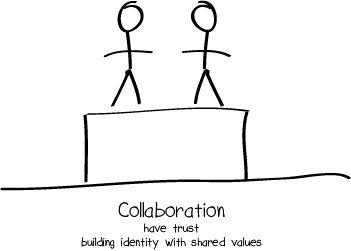
Yet, there is a strong element of intimidation. This, we cannot ignore. I’ve been on the receiving side of intimidation. It is subtle and, strangely, more powerful in its exclusionary effect. It exhibits itself as quiet arrogance, and other times as open boorishness. Tech conferences are testosterone events where geeks flex their muscles using absurd measurements of superiority like “my big data is bigger than your big data” or “I’ve got more pull requests accepted on blah-blah-blah repo than you”. All it takes is one moment of acknowledgement, a moment where there is a little light shining on us and people smile and say that we are awesome. It is that moment when we pack the soap box in our suitcase and take it everywhere. From that moment, the superior position is taken and others struggle to fit in, white or not, male or not. Tech events are open for those of us with soap boxes. Oh, and you must make sure your soap box is bigger than other soap boxes.
This is why I promised myself to always step off the podium and be accessible to everyone in the room and beyond. This topic of soapboxes, self appointed popes, cardinals and priests of industry, blogging, tweeting, etc deserves deeper discussion more than this already far too long blog post. And, yes, I know that my irony is that I’m blogging and tweeting too.

Tell me when you’re done talking
I was uncertain by what Kevin meant when he asked me to let him know when I’m done talking. It would have been easy for me to fire a flame attack along the lines of “WTF makes you think I’m all talk and no action?”. That’s not useful because twitter is a horrible medium that draws assumptions out of people. So, I just asked for clarity first. This is important; a behaviour that I try to instil in myself all the time – pause, listen, think and ask for clarification if I have even the slightest doubt. That double check saves me a lot of unnecessary flaming. I also found that asking for clarification in the face of cynicism does defuse the situation. Then again, rushing around with a burning flamethrower, defending every single one my opinions is a horrible way to spend my life. It doesn’t take me forward in the least bit. Worse, still, is that it causes me to stagnate.
I do try my best to not draw public attention to the work that I do. I respect the privacy of being in a group and have learnt a long time ago that it is self-serving to tweet about such work. As a mentor to a few people for many years, I respect that unspoken code of confidentiality. Being a mentor, for me, is a two way street. I need to be equally open and honest as I expect of the other. Sometimes, that means being quite personal and deeply private. So, I don’t crow about my work. But I blog and open conversations based on observations which I’ve extracted from my time with others.
Those that work closely with me know the extents to which I go to change the status quo. Then there are those that are even closer that know the extent to which it pains me when I can’t change the status quo. At a deeply philosophical level, is it possible to give unconditionally – without even the tiniest drop of self-serving satisfaction?

Celebrate the success
Mark Pearl, on a separate conversation stream, reminded me that that progress was being made. That is true, there is progress being made. I mentioned that at Agile Africa that the demographics are changing, slowly for the better. I think we are moving forward and I am not so concerned about the pace either. There is a part of me, though, that is cautious of grand celebrations for small steps. That is just me. I prefer constant acknowledgment of progress for each tiny step. It keeps me humble, knowing that the big picture is still not fully painted.

Can I plug in, please?
Hearing that I am doing something, Kevin invited me to breakfast to hear more so that he can plug in. I’m happy to share with most people, but this work isn’t about plugging in. It is not a thing at all. It is about my individual behaviour and attitude. There are no recipes that I can offer to make this better. It requires me to find a connection with myself. It is about holding a heightened sense of self-awareness, of each thought, each action and each consequence. It demands a level of honesty with myself that is, at times, extremely hard to face. This is a journey that I’ve been trying to walk. It is painful to look in the mirror and see beyond the reflection. I am motivated by a belief that we have a primal encoding for decency and an inclusive humane culture. Everything else is an invention that is designed to obscure that basic encoding.
For more than 50% of the time, I get it wrong – my behavior and attitude. So, I cannot stop here and I must persevere with this. This is why demographic representation is important. It is a measure of our collective shedding of invented biases and a statement of us including each other without prejudice.
To Kevin and the others, thanks for opening a powerful, multi-faceted conversation. And if you want to plug-in to this inclusive, humane culture, then you will need to plug-in to yourself first. This is not something I can help others plug in to. I can only behave in a way that I want our software community to behave. I believe that others will change in step.
 All my models start messy. Yet, I find that my messy models are actually quite useful. It forces me to acknowledge my ignorance. The longer I feign ignorance, the longer it takes for the mess to surface. The more I appeal to my ego with “Hey, look! My model is very cool!”, the longer I delay learning something useful.

 I am facilitating a panel discussion as one of Cape Town’s World Design Capital 2014 events, in collaboration with the IEEE. Attendance is free.

 f3yourmind